Longevity: Personalized Cancer Screening- Current Guidelines and Emerging Technologies
Written By Adama Diarra, DO, FACP
Board Certified Internal Medicine (American Board of Internal Medicine-ABIM)
Introduction
Cancer screening is a critical component of preventive healthcare and can be a power ally in the longevity quest. Timely cancer screening allows for the early detection of malignancies when treatment is most effective. Various organizations, including the U.S. Preventive Services Task Force (USPSTF), American Cancer Society (ACS), and National Comprehensive Cancer Network (NCCN), provide evidence-based screening guidelines based on age, gender, family history, lifestyle factors, and individual risk levels. As medical technology advances, full body MRI scans and blood-based cancer screening (liquid biopsies) are emerging as a promising, non-invasive tool for detecting cancer earlier and more efficiently.
Current Cancer Screening Guidelines & Conventional screenings
Breast Cancer
USPSTF: Mammograms every 2 years for women aged 40 to 74, with the strongest benefit for those 50 to 74.
ACS: Annual mammograms starting at 45, with the option to begin at 40; after 55, women can switch to biennial screening.
NCCN: Supports annual mammography starting at 40 and recommends MRI screening for high-risk women (e.g., those with BRCA mutations or a strong family history).
Cervical Cancer
USPSTF & ACS:
Ages 21 to 29 → Pap smear every 3 years.
Ages 30 to 65 → Pap smear every 3 years, HPV testing every 5 years, or co-testing (Pap + HPV) every 5 years.
Screening may stop after 65 if previous tests were normal and the patient is not at high risk.
NCCN: Similar guidelines but emphasizes HPV testing as the preferred method for women over 30.
Colorectal Cancer
USPSTF & ACS: Screening begins at age 45 for average-risk individuals, continuing until age 75. Screening options include:
Colonoscopy every 10 years
Fecal immunochemical test (FIT) annually
Stool DNA test every 1 to 3 years
CT colonography every 5 years
NCCN: Suggests earlier and more frequent screening for individuals with a family history or genetic syndromes such as Lynch syndrome.
Lung Cancer
USPSTF & ACS: Annual low-dose CT (LDCT) screening for adults 50 to 80 with a 30-pack-year smoking history who currently smoke or quit within the past 15 years.
NCCN: Expands recommendations to individuals aged 50+ with at least a 20-pack-year smoking history, especially if they have additional risk factors (e.g., family history, occupational exposure).
Prostate Cancer
USPSTF: Routine PSA screening is not universally recommended but may be considered for men 55 to 69 after discussing risks and benefits. Screening is not recommended after age 70.
ACS & NCCN:
Men 50+ with average risk should discuss PSA screening with their doctor.
High-risk groups (African American men, those with a family history) should begin screening at age 40 to 45.
Ovarian Cancer
USPSTF & ACS: Routine screening is not recommended for asymptomatic women at average risk.
NCCN: Recommends genetic testing and transvaginal ultrasound for high-risk women (e.g., BRCA mutations, strong family history).
Skin Cancer
USPSTF: No routine screening recommendation for asymptomatic adults.
ACS: Encourages self-exams and regular skin checks for individuals at high risk (e.g., fair skin, history of sunburns, excessive UV exposure).
NCCN: Suggests annual full-body skin exams by a dermatologist for high-risk individuals.
Other Cancer Screenings
Pancreatic Cancer: Routine screening not recommended by USPSTF or ACS, but NCCN suggests imaging for individuals with strong family history or genetic risk (BRCA, Lynch syndrome).
Liver Cancer: NCCN and ACS recommend ultrasound and AFP (alpha-fetoprotein) blood testing every 6 months for patients with cirrhosis or chronic hepatitis B.

The Future of Cancer Screening: Liquid Biopsies and Advanced Early-Detection Tools
Cancer screening is undergoing a profound shift. For decades, detection has relied on organ-specific tests—mammograms, colonoscopies, Pap smears, low-dose CT scans—and these remain essential tools. But a new generation of technology is emerging that may allow us to detect cancers earlier, less invasively, and in some cases before symptoms develop.
One of the most promising innovations is the blood-based cancer screen, often referred to as a liquid biopsy.
What Are Liquid Biopsies?
Liquid biopsies analyze circulating tumor DNA (ctDNA), cell-free DNA (cfDNA), methylation patterns, and other molecular biomarkers found in a simple blood sample. These fragments can carry the genetic fingerprint of a tumor—sometimes even before a cancer becomes visible on imaging.
Instead of looking for one cancer at a time, scientists can now look for molecular signals that suggest a cancer is developing anywhere in the body.
Multi-Cancer Early Detection (MCED) Tests
A major breakthrough has been the development of multi-cancer early detection (MCED) tests, which use advanced molecular profiling and artificial intelligence to screen for dozens of cancers simultaneously. These platforms analyze patterns in methylation, mutation, and fragmentomics—essentially teaching algorithms to recognize the “signature” of cancer.
Recent clinical trials have shown encouraging results:
MCED tests can detect cancer signals across a wide range of solid tumors and hematologic malignancies.
Some tests can also predict a tissue of origin, guiding next steps in evaluation.
MCED testing has the potential to catch aggressive cancers that currently have no routine screening test, such as pancreatic, ovarian, liver, kidney, and stomach cancers.
For example, in colorectal cancer screening, a cfDNA blood-based test demonstrated 83% sensitivity and 90% specificity for advanced neoplasia (Lennon et al., 2020).
Large validation studies are ongoing, including methylation-based platforms showing strong performance in detecting early-stage disease (Klein et al., 2021).
Why This Matters for Longevity-Focused Care
Most cancers that cause death today are ones we don’t routinely screen for. MCED tests aim to close this gap.
This is why—in my practice—I offer Multi-Cancer Early Detection testing to patients who want to take a proactive, longevity-focused approach to their health. While these tests are not replacements for traditional screening, they provide an additional layer of early detection, especially for cancers that historically go unnoticed until late stages.
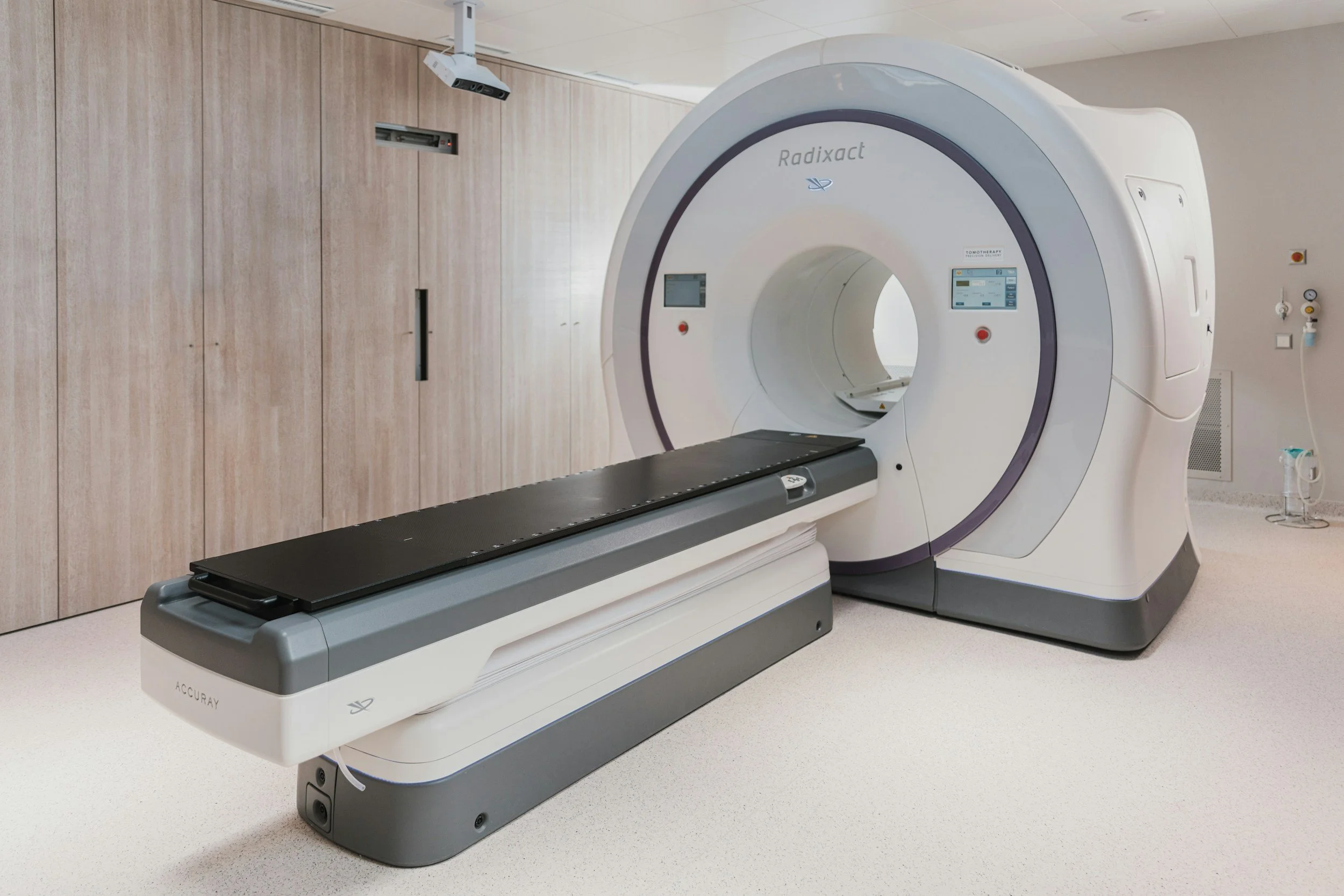
Full-Body MRI: Another Powerful Early-Detection Tool
In addition to MCED blood tests, I also offer patients the option of undergoing a Full-Body MRI scan. Unlike CT scans, MRI does not use radiation, making it safe for annual or periodic screening. Full-body MRI can:
Detect solid tumors at earlier, more treatable stages
Reveal lesions in organs that otherwise have no standard screening test
Identify structural or anatomic abnormalities years before symptoms emerge
When used thoughtfully—paired with a comprehensive clinical evaluation—they can significantly enhance early detection in high-risk or longevity-focused individuals.
Challenges and Considerations
While liquid biopsies and whole-body MRIs are exciting, they are not perfect. Challenges remain:
Variability in testing methods: Not all MCED platforms perform the same.
False positives and incidental findings: These require expert interpretation.
Regulatory and insurance considerations: Many tests are still self-pay while long-term cost-effectiveness studies continue.
Integration into care: These tools must complement—not replace—USPSTF, ACS, and NCCN guidelines.
Ongoing large-scale trials will be crucial for standardization, regulatory approval, and widespread adoption.
Where We Are Heading
Traditional cancer screening saves lives and remains the clinical gold standard. But the future of early detection is evolving quickly:
Liquid biopsies allow us to “see” cancer signals in the blood.
Multi-cancer screening detects tumors we have never been able to screen for before.
Full-body MRI offers non-invasive visualization of solid tumors.
AI-assisted molecular diagnostics are accelerating rapidly.
In my practice, I combine evidence-based guidelines with next-generation screening technology—aiming to identify disease at its earliest, most treatable stage and help patients live longer, healthier lives.

References
U.S. Preventive Services Task Force (USPSTF). (n.d.). A and B recommendations. Retrieved February 3, 2025.
American Cancer Society (ACS). (n.d.). Guidelines for the early detection of cancer. Retrieved February 3, 2025.
Lennon, A. M., et al. (2020). Feasibility of blood testing combined with PET-CT to screen for cancer and guide intervention. Science, 369(6499), eabb9601.
Klein, E. A., et al. (2021). Clinical validation of a targeted methylation-based multi-cancer early detection test. Annals of Oncology, 32(9), 1167–1177.

Workshop: Build Your Personalized Cancer-Screening Roadmap
These questions are meant to help you reflect, take inventory, and create an individualized plan for cancer screening—using both established guidelines and emerging technologies like full-body MRI and multi-cancer blood tests.
1. Understanding Your Personal Risk
What is your age and biological sex?
(Many screening guidelines are age- and sex-specific.)Do you have a family history of cancer?
Which cancers? At what ages were relatives diagnosed?Do you have any known genetic mutations (BRCA1/2, Lynch syndrome, etc.) or have you ever been recommended genetic counseling?
Do you smoke or have you smoked in the past?
Estimate your pack-year history.Do you have any chronic conditions (cirrhosis, hepatitis B, inflammatory bowel disease) that increase your cancer risk?
Have you had high-risk occupational exposures?
(E.g., asbestos, benzene, silica, heavy metals.)Do you have lifestyle factors that may increase risk?
(Sedentary life, excessive alcohol consumption, obesity, low-fiber diet, high sun exposure.)
2. Reviewing Your Conventional Screenings
Use these questions to identify gaps based on USPSTF, ACS, NCCN guidance.
Breast Cancer (women)
When was your last mammogram?
Have you discussed MRI screening if you have a strong family history or genetic risk?
Cervical Cancer (women)
When was your last Pap smear or HPV test?
Have you completed routine screening through age 65?
Colorectal Cancer (everyone starting at 45)
Have you completed any colorectal cancer screening (FIT, Cologuard, colonoscopy)?
If you’ve had polyps in the past, are you following the recommended interval?
Lung Cancer
Do you meet criteria for a low-dose CT scan (age 50–80 + 20–30 pack-years + currently smoking or quit within 15 years)?
Prostate Cancer (men)
Have you discussed PSA screening with your clinician, especially if you are African American or have a strong family history?
Skin Cancer
Do you perform regular skin self-exams?
Have you ever had a full-body skin check by a dermatologist?
Ovarian Cancer (women)
Do you have a family history suggesting increased risk (e.g., breast, ovarian, pancreatic cancer)?
Have you discussed whether genetic counseling or screening ultrasound is appropriate?
Liver Cancer
If you have liver disease (cirrhosis, hepatitis B), are you getting ultrasound + AFP blood tests every 6 months?
3. Exploring Advanced Early-Detection Technologies
(These questions help readers reflect on whether next-generation screening aligns with their risk, priorities, and longevity goals.)
Full-Body MRI
Would you benefit from a non-invasive imaging test that screens for solid tumors without radiation exposure?
If you’ve had unexplained symptoms, complex history, or high-risk genetics, have you considered whether full-body MRI could add value?
How would early detection of hidden tumors impact your peace of mind and long-term health planning?
Multi-Cancer Early Detection (MCED) Blood Testing
Would you benefit from a test that screens for dozens of cancers simultaneously—especially those without routine screening (pancreatic, ovarian, liver, kidney, stomach)?
Do you want to add MCED testing to your annual longevity plan as an additional layer of early detection?
If a test found a "cancer signal," do you have access to a physician who can guide next steps, interpretation, and follow-up diagnostics?
(If you are your patient, the answer is yes.)
4. Designing Your Personalized Screening Plan
Based on your age and risk factors, which screenings are you overdue for?
Which screenings do you want to add or update in the next 12 months?
What barriers (fear, cost, scheduling, uncertainty) have prevented you from completing recommended screenings?
What is one step you can take this month to move toward a complete cancer-screening plan?
Are you interested in combining conventional screening with advanced early-detection strategies such as:
🧬 Multi-Cancer Early Detection blood testing?
🧲 Full-body MRI scan?
🧪 Genetic testing for hereditary cancer risk?
Do you have a physician who can help interpret results and create a tailored long-term prevention plan?
(If you are reading my newsletter, I offer both MCED and full-body MRI screening options as part of a personalized longevity approach.)
5. Reflection: Your Longevity Mindset
How important is early detection to your longevity goals?
What would it mean for you to catch a life-threatening condition years earlier than traditional methods allow?
What does “being proactive” look like in your personal health journey?